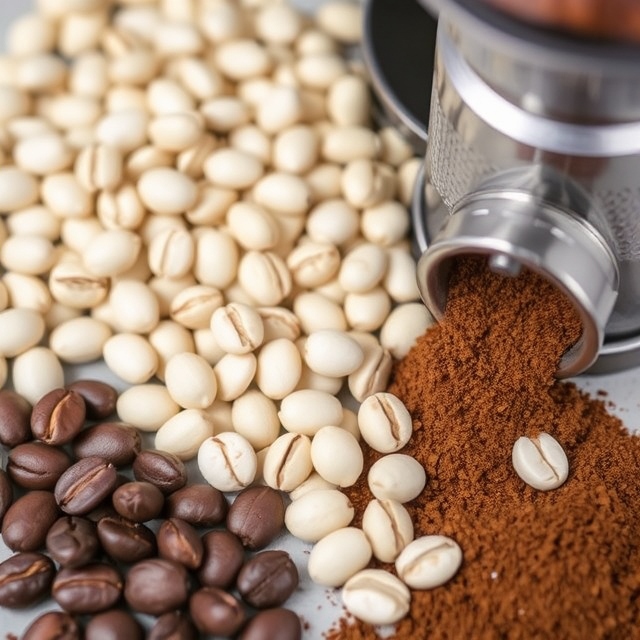
Dense coffee beans can be harder to grind than darker, more developed roasted beans. This is particularly noticeable with very lightly roasted coffee, where the beans can retain a compact and firm structure. For home brewers, that difference can affect the choice of grinder, grind size, and even whether whole-bean or pre-ground coffee is more practical.
Understanding why some coffee beans are unusually hard makes their preparation much easier to manage.
Why Are Dense Coffee Beans Harder to Grind?
Coffee beans begin as green seeds with a relatively compact cellular structure. Roasting changes that structure through heat, moisture loss, expansion, and chemical reactions.
As roasting becomes more developed, the bean undergoes greater physical transformation. The structure becomes more brittle, and the roasted coffee can be easier to fracture during grinding.
Very light roasting produces a different result. Because the beans receive less roast development, they can remain comparatively dense and firm. A grinder therefore has to apply more force to break them into smaller particles.
This is one reason an exceptionally pale coffee can feel dramatically different from a medium or dark roast when it goes into a grinder.
How Roast Level Affects Bean Hardness
Roast level influences much more than bean color. It affects density, brittleness, aroma, flavor, and how the coffee responds during preparation.
A darker roast has experienced more thermal development, which changes the internal structure of the bean. A very light roast has undergone less of that transformation.
Consequently, two beans can require different grinding approaches even if they are similar in size.
This relationship is especially relevant when dealing with American-style white coffee, which is generally associated with an exceptionally light roast. The pale appearance is part of what makes this style distinctive, but the limited roast development can also contribute to its firm texture.
What Makes Dense White Coffee Beans Different?
Dense white coffee beans can retain a particularly compact structure because of their unusually light roast profile. They are not simply ordinary dark-roasted beans that happen to have a different color.
The physical characteristics can influence several stages of preparation. Grinding may require more capable equipment, while brewing may require adjustments to achieve effective extraction.
However, density varies from coffee to coffee. Origin, processing, moisture content, bean structure, and roast profile can all contribute to differences in hardness.
That means not every light roast will behave identically, but exceptionally light coffee should generally be approached with more attention to equipment and preparation.
Can a Normal Coffee Grinder Grind Them?
It depends on the grinder.
A quality burr grinder is designed to process coffee beans into relatively consistent particles, but different models have different capabilities. A very dense coffee may place more demand on the grinding mechanism than a conventional roast.
Small grinders may struggle with particularly hard beans, especially if they are not designed for frequent heavy use. Blade grinders are also less useful when consistent particle size is important because they chop rather than precisely mill the beans.
If a grinder stalls, makes unusual noises, or struggles repeatedly, forcing it to continue is not a good approach. Checking the manufacturer’s instructions and using equipment appropriate for the beans is safer and more practical.
Why Grind Consistency Still Matters
Hardness is only one part of the brewing equation. Once the beans have been ground, particle-size consistency becomes important.
Drip coffee generally uses a medium grind, while French press brewing typically calls for a coarser grind. Espresso requires a much finer grind and therefore demands particularly precise control.
With very light coffee, the correct grind may require experimentation. If the particles are too coarse, extraction can be insufficient. If they are excessively fine, water flow and extraction can become difficult to control.
The ideal setting depends on the brewing method and the specific coffee.
Is Pre-Ground Coffee a Practical Alternative?
For exceptionally hard beans, pre-ground coffee can be a convenient alternative.
Grinding coffee immediately before brewing offers freshness and control, but those benefits are less useful if the available grinder cannot process the beans properly. A suitable pre-ground option eliminates the need to put unusually dense beans through equipment that may not be designed for them.
When choosing pre-ground coffee, the grind should match the intended brewing method. Espresso, drip machines, and French presses require different particle sizes.
For people exploring this unusual roast style, learning more about dense white coffee beans can also provide useful context about the distinctive characteristics of these exceptionally light-roasted beans.
Does Bean Density Affect Brewing?
It can.
The physical structure of coffee affects how water moves through the grounds and interacts with the soluble compounds inside them. Very light coffee can therefore behave differently during extraction compared with more developed roasts.
Water temperature, grind size, brew ratio, contact time, and brewing technique all influence the result. A recipe that works well for a familiar medium roast may not produce the same balance with exceptionally light coffee.
Rather than assuming that one recipe works for every roast, brewers can adjust individual variables while paying attention to flavor and extraction.
How to Handle Hard Coffee Beans at Home
When working with dense coffee, a few practical habits can make preparation easier:
- Use a grinder that is appropriate for the type of beans being processed.
- Avoid forcing a grinder when it repeatedly stalls or struggles.
- Choose a grind size according to the brewing method.
- Make small recipe adjustments instead of changing several variables at once.
- Consider pre-ground coffee when suitable grinding equipment is unavailable.
- Keep the grinder clean and follow its operating instructions.
These steps help turn an unusual physical characteristic into a manageable part of the brewing process.
Does Hardness Mean Better Coffee?
No. Hardness is a physical characteristic, not a direct measure of coffee quality.
Some drinkers prefer very light coffee because of its distinctive roast profile and flavor characteristics, while others enjoy the deeper, more developed flavors associated with darker roasting. The right choice depends on individual taste and brewing preferences.
The important distinction is that very light roasting can influence both how coffee tastes and how it behaves mechanically.
Dense coffee beans are difficult to grind primarily because their structure can remain unusually firm when roasting is stopped at a very light stage. Once that connection is understood, choosing the right grinder, grind setting, and brewing approach becomes much easier.

