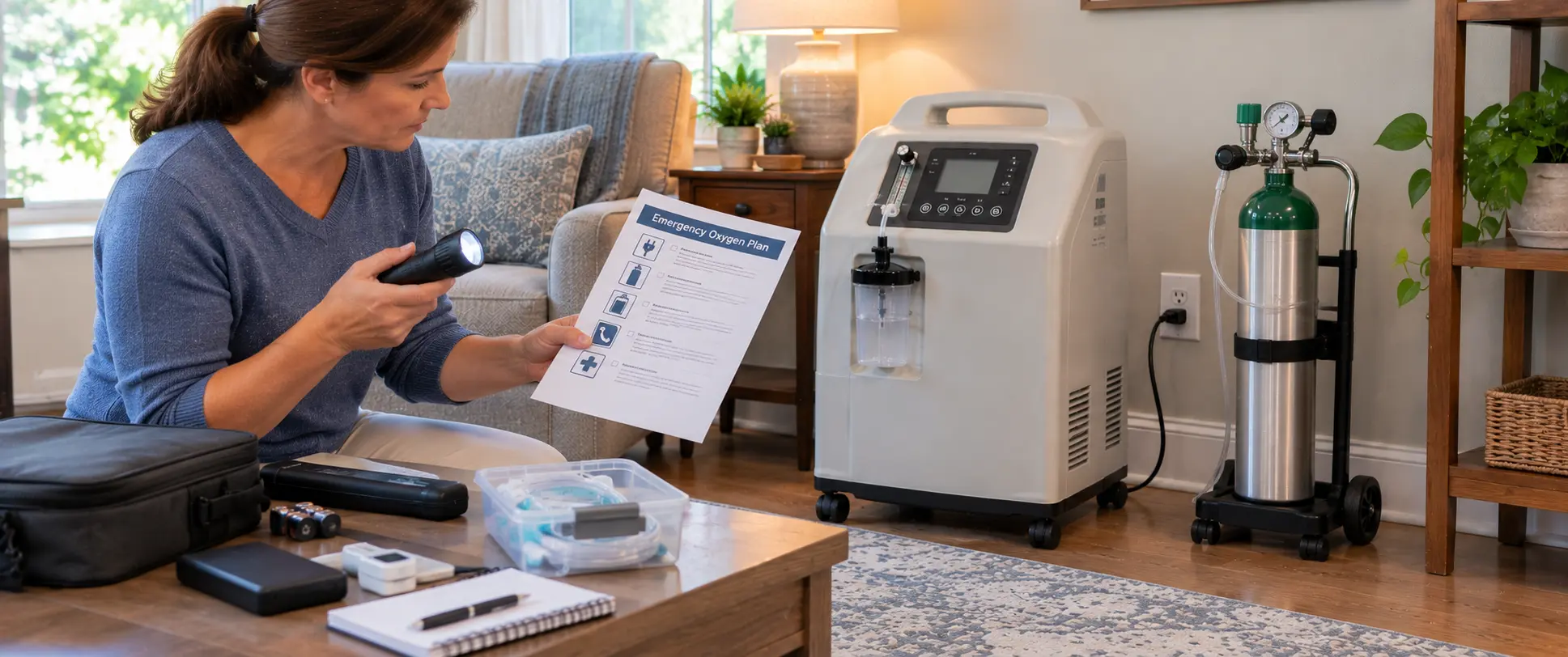
During an oxygen concentrator power outage, a standard mains-powered stationary concentrator stops producing oxygen-enriched gas because its compressor and internal systems require electricity. Unless the device has a compatible backup power source, it cannot continue normal oxygen delivery.
This interruption is particularly important for patients who depend on prescribed oxygen therapy throughout the day or night.
Some concentrators have power-failure alarms that alert users when electricity is interrupted. However, an alarm does not mean the machine can continue supplying oxygen.
Patients and caregivers should understand these limitations and establish a backup oxygen plan with their healthcare provider before an outage occurs.
Why Does an Oxygen Concentrator Stop During a Power Outage?
A stationary oxygen concentrator uses electrical power to operate several essential components.
These commonly include:
- An air compressor that draws in and pressurizes room air.
- Internal valves that control the oxygen-separation process.
- Cooling components that help regulate operating temperatures.
- Electronic controls and monitoring systems.
When electrical power becomes unavailable, these systems cannot continue operating normally.
Unlike a compressed oxygen cylinder, a standard stationary concentrator does not store a substantial reserve of oxygen for continued therapy.
Therefore, patients should not assume that oxygen will remain available after the machine stops.
Does an Oxygen Concentrator Have a Backup Battery?
Most conventional stationary oxygen concentrators do not include a built-in battery capable of supporting continued operation during an extended power interruption.
Portable oxygen concentrators often have rechargeable batteries, but their oxygen delivery capabilities and operating times vary.
In addition, a portable model may not provide the same continuous-flow output as a stationary concentrator.
Consequently, patients should not automatically consider a portable concentrator a suitable emergency replacement.
Any backup device must meet the patient’s prescribed oxygen requirements and receive appropriate clinical approval.
Understanding Oxygen Concentrator Power Outage Alarms
Some stationary concentrators include audible or visual warnings for electrical interruptions.
A power-failure alarm may activate when the equipment loses its normal electrical supply.
However, alarm behavior depends on the manufacturer and model.
What Does a Power-Failure Alarm Mean?
A power-failure alarm generally indicates that the concentrator is no longer receiving the electricity needed for normal operation.
It does not necessarily indicate an internal mechanical failure.
Possible causes include:
- A household electricity outage.
- An unplugged power cord.
- A disconnected electrical supply.
- A tripped circuit breaker.
- Another interruption affecting the outlet.
Users should consult the equipment manual to identify the exact warning and recommended response.
Will the Alarm Continue Without Electricity?
Some concentrators use an internal alarm power source that allows a warning to sound briefly after electrical power is lost.
However, the duration and behavior vary between models.
Patients should never rely on an alarm to provide backup oxygen or assume that every concentrator includes the same warning system.
Preparing Backup Oxygen for a Concentrator Power Outage
Backup planning is essential for patients who require oxygen therapy when household electricity is unavailable.
For example, the DeVilbiss 525KS product listing identifies a stationary continuous-flow concentrator manufactured by Drive DeVilbiss Healthcare.
Like other mains-powered stationary concentrators, this equipment requires an appropriate electrical supply for normal operation.
Patients using such equipment should discuss backup arrangements with their prescribing healthcare professional and oxygen supplier.
Backup Oxygen Cylinders
A medical oxygen cylinder may provide an alternative oxygen source during an interruption.
Unlike an electrically powered concentrator, a compressed oxygen cylinder does not require household electricity to release its stored oxygen.
However, the cylinder must have a suitable regulator and delivery arrangement.
The required cylinder capacity depends on the prescribed oxygen flow and anticipated duration of use.
Patients should receive instructions on safe cylinder handling, storage, and operation.
Alternative Oxygen Equipment
Some patients may have access to another medically appropriate oxygen delivery system.
However, the alternative must support the prescribed oxygen requirements.
Patients should not independently substitute a pulse-dose portable concentrator for continuous-flow therapy.
The healthcare provider should determine whether an alternative device is suitable.
What Should You Do During an Oxygen Concentrator Power Outage?
The correct response depends on the patient’s medical condition and established emergency plan.
However, several general principles apply.
Follow the Prescribed Backup Oxygen Plan
If the concentrator stops, follow the backup oxygen instructions provided by the healthcare team.
Use only the approved alternative oxygen source and prescribed settings.
Do not wait for electricity to return if the patient requires uninterrupted oxygen delivery.
Check the Electrical Supply Safely
If appropriate, determine whether the outage affects the entire home or only one outlet.
However, avoid unsafe electrical troubleshooting.
Do not open the concentrator, bypass electrical protections, or attempt unauthorized repairs.
Contact the Appropriate Provider
If the interruption may last longer than the available backup supply, contact the oxygen equipment provider or healthcare team promptly.
If prescribed oxygen is unavailable or the patient develops severe breathlessness, confusion, blue or gray discoloration, or other emergency symptoms, seek emergency medical assistance immediately.
The U.S. Food and Drug Administration’s guidance on home oxygen therapy provides additional information about oxygen concentrator use and safety precautions.
Can a Generator or Battery Power an Oxygen Concentrator?
Some concentrators may operate with an appropriately rated external power system.
However, users must confirm compatibility before connecting an alternative power source.
Electrical requirements include voltage, frequency, power consumption, and potential startup demands.
A generator or inverter that appears powerful enough may still provide unsuitable electrical output.
Therefore, patients should consult the equipment manufacturer or authorized supplier before connecting alternative power equipment.
Generators must never operate indoors or in enclosed spaces because of carbon monoxide poisoning risks.
In addition, oxygen equipment must remain away from flames, smoking, and other ignition hazards.
Restarting an Oxygen Concentrator After a Power Outage
When electricity returns, users should follow the manufacturer’s instructions for restarting or checking the concentrator.
Some models may resume operation automatically, while others require user action.
Confirm that the equipment displays its expected operating indicators and that no unresolved alarms remain.
If the device does not operate normally, contact the equipment provider.
Do not discontinue a medically necessary backup oxygen supply until the prescribed delivery arrangement has been safely restored.
How to Prepare for Future Oxygen Concentrator Power Interruptions
A practical emergency plan should address both oxygen availability and communication.
Important preparations include:
- Confirming the prescribed backup oxygen arrangement.
- Keeping supplier and emergency contact details accessible.
- Understanding how to operate approved backup equipment.
- Checking backup supplies according to provider instructions.
- Planning for prolonged outages or evacuation.
- Ensuring caregivers understand the emergency procedures.
Where available, patients may also ask their electricity provider about medical equipment support or outage notification programs.
However, utility registration does not guarantee uninterrupted electrical service.
Review Your Emergency Oxygen Plan Regularly
Patients and caregivers should review their backup arrangements whenever oxygen requirements or equipment change.
For example, a different prescribed flow rate may affect how long a backup oxygen cylinder lasts.
Likewise, changes in household electricity reliability may require additional planning.
Discuss these circumstances with the healthcare team rather than independently modifying oxygen settings.
Final Thoughts on Oxygen Concentrator Power Outages
An oxygen concentrator power outage can interrupt prescribed oxygen delivery because standard stationary concentrators depend on electricity.
Although some devices provide power-failure alarms, these warnings do not replace a reliable backup oxygen arrangement.
Patients and caregivers should understand their equipment’s electrical limitations, prepare suitable alternatives, and follow a clinician-approved emergency plan.
With appropriate preparation, households can respond more effectively to unexpected power interruptions while prioritizing patient safety and continuity of oxygen therapy.

